
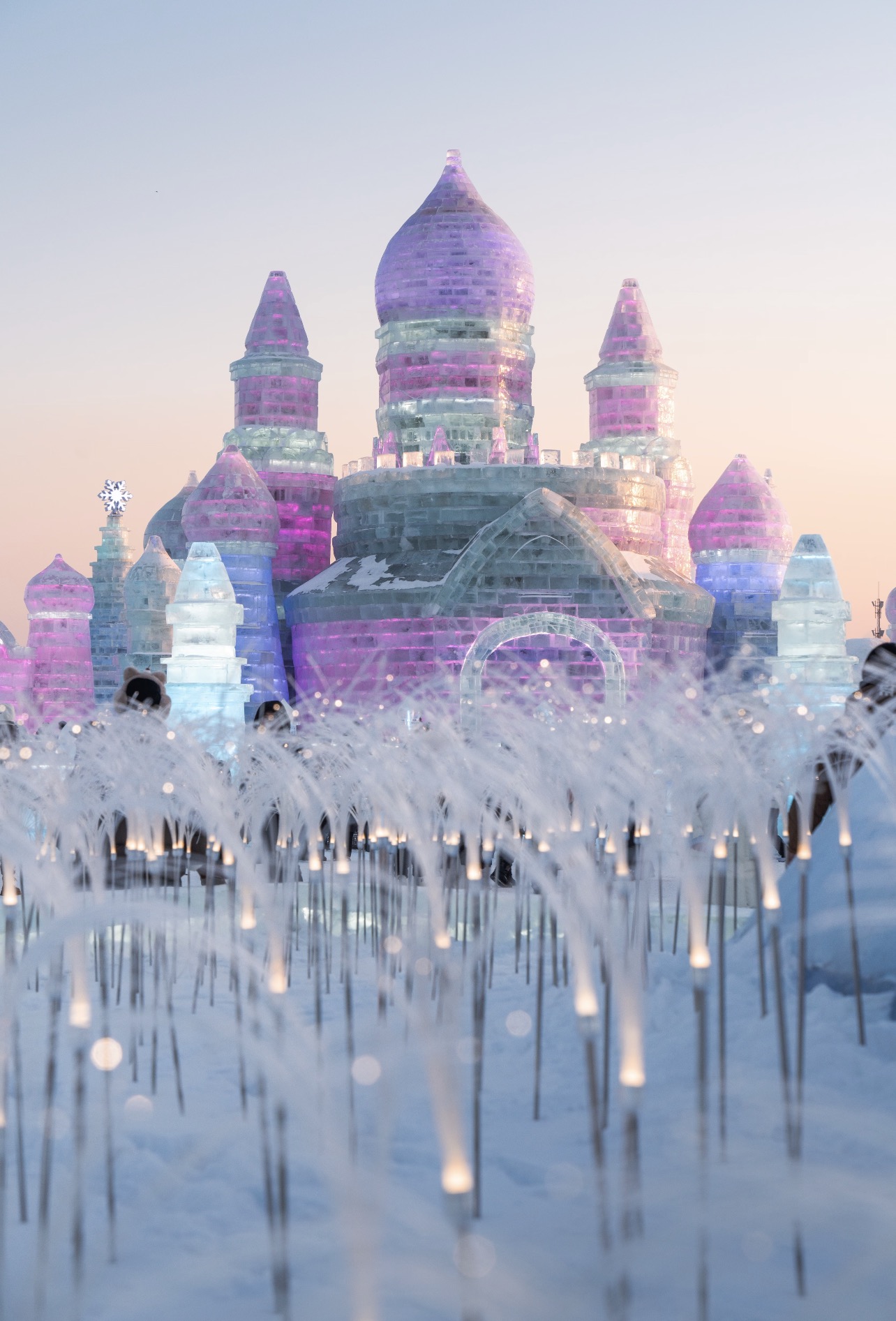
Harbin is the one major Chinese city that gets more interesting as the temperature drops. It sits in the far north-east, about two hours by air from Beijing, and from late December to late February it hosts the largest winter festival in China. The city itself is worth the trip: Russian-era brick streets, a frozen river turned into a playground, and food built for cold weather.
This guide covers what the festival actually is, when to go, what the cold means in practice, and how we plan a private winter journey around it. For the rest of China in winter, see Winter in China.
When to go: Christmas or January?
The two are different trips.
At Christmas, Harbin is already deep in winter. The city is decorated, the river is frozen, and the Ice and Snow World usually opens in late December, weather permitting. But the festival is not yet at full scale, and some ice structures are still being finished.
From early January the festival is fully open. The official opening is usually held on 5 January, and January to early February is when the ice is at its clearest and every venue is running. It is also the busiest period, with Chinese New Year falling in mid-February in 2027.
If you want the complete festival, go in January. If you want a white Christmas with the city lit up and fewer crowds at the ice park, go in late December and accept that some parts will still be under construction.
- Late December: the city, the river carnival and part of the Ice and Snow World are open. Crowds are moderate.
- 5 January to early February: everything is open. Crowds are high.
- Mid-February onward: everything is open and the ice begins to weather. Crowds are very high around Chinese New Year.
What the festival actually is
The Harbin International Ice and Snow Festival is not one venue. It is a season across the city, with three main sites.
Harbin Ice and Snow World
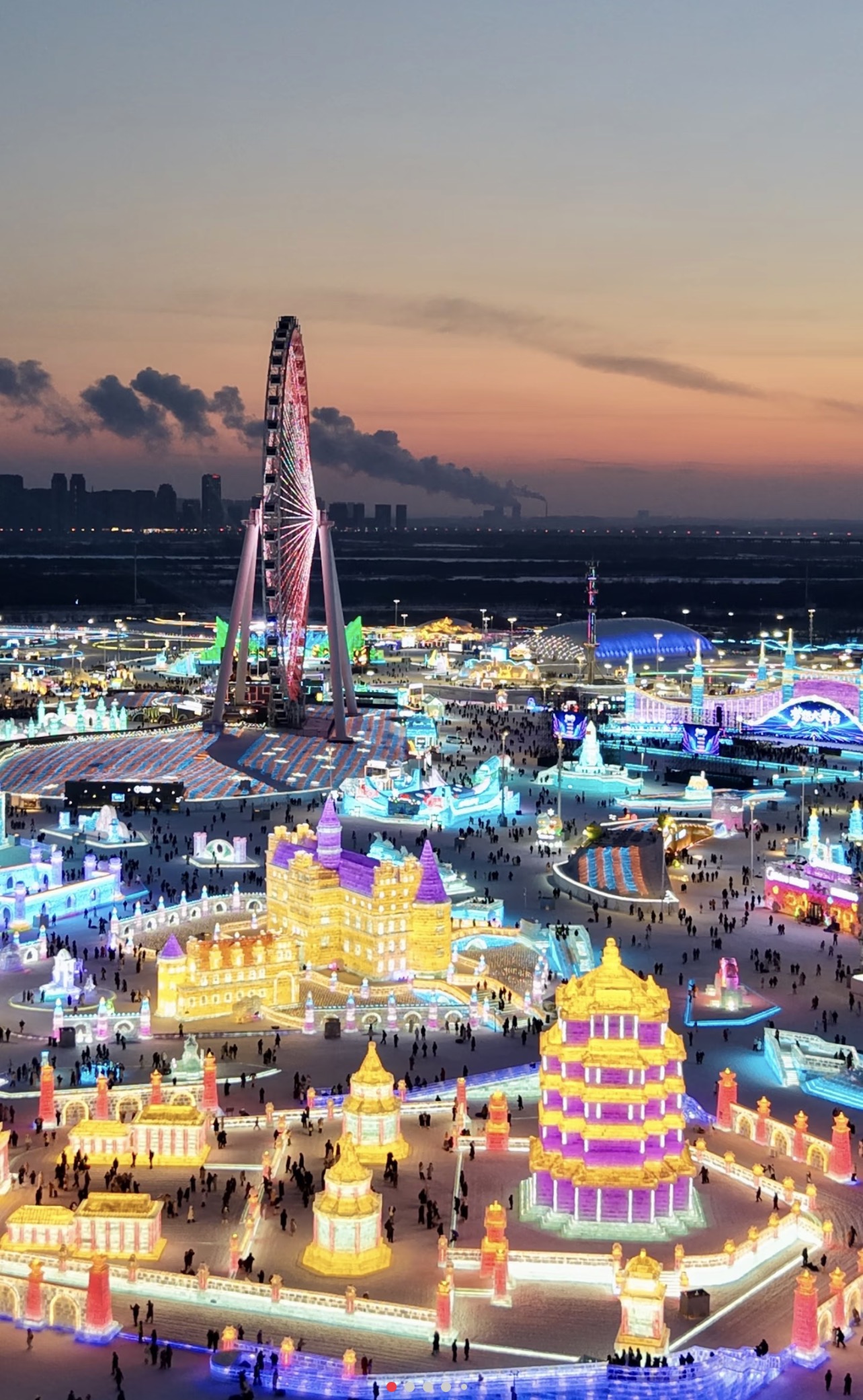
This is a winter park built each year on the north bank of the Songhua River. Workers cut blocks of river ice and assemble them into full-size buildings, towers, walls and slides, with lights set inside the ice. Visitors walk through it, climb some of the structures, and ride the ice slides. It is rebuilt from scratch every winter and melts in spring.
The single most useful piece of advice we can give: arrive in daylight, around 3pm. You will see the ice clear and blue under the sky, then watch the sun go down (just after 4pm in early January) and the lights come on across the whole park. Most visitors arrive after dark and miss the first half.
The long ice slide is the most popular ride, and queues can run past an hour on busy evenings. There is a Ferris wheel with enclosed cabins for a view over the park. Indoor performances run in the evening. Allow three hours, with a warm-up break inside.
Sun Island Snow Sculpture Expo
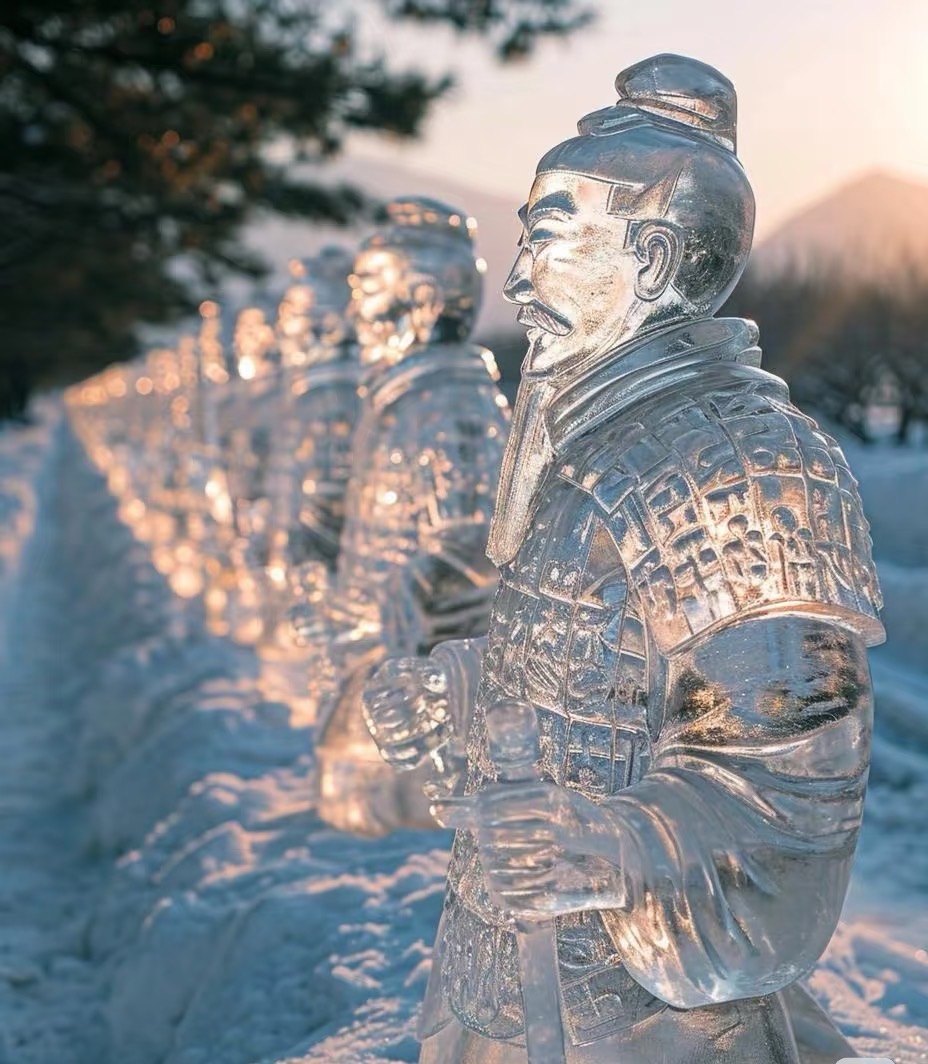
Across the river from the ice park, Sun Island is the daytime counterpart. The sculptures here are carved from packed snow rather than ice, so they are opaque, white and often very large. Go in the brighter part of the day; the texture and shadows are what make snow carving worth seeing. Allow two to three hours.
Zhaolin Park ice lanterns
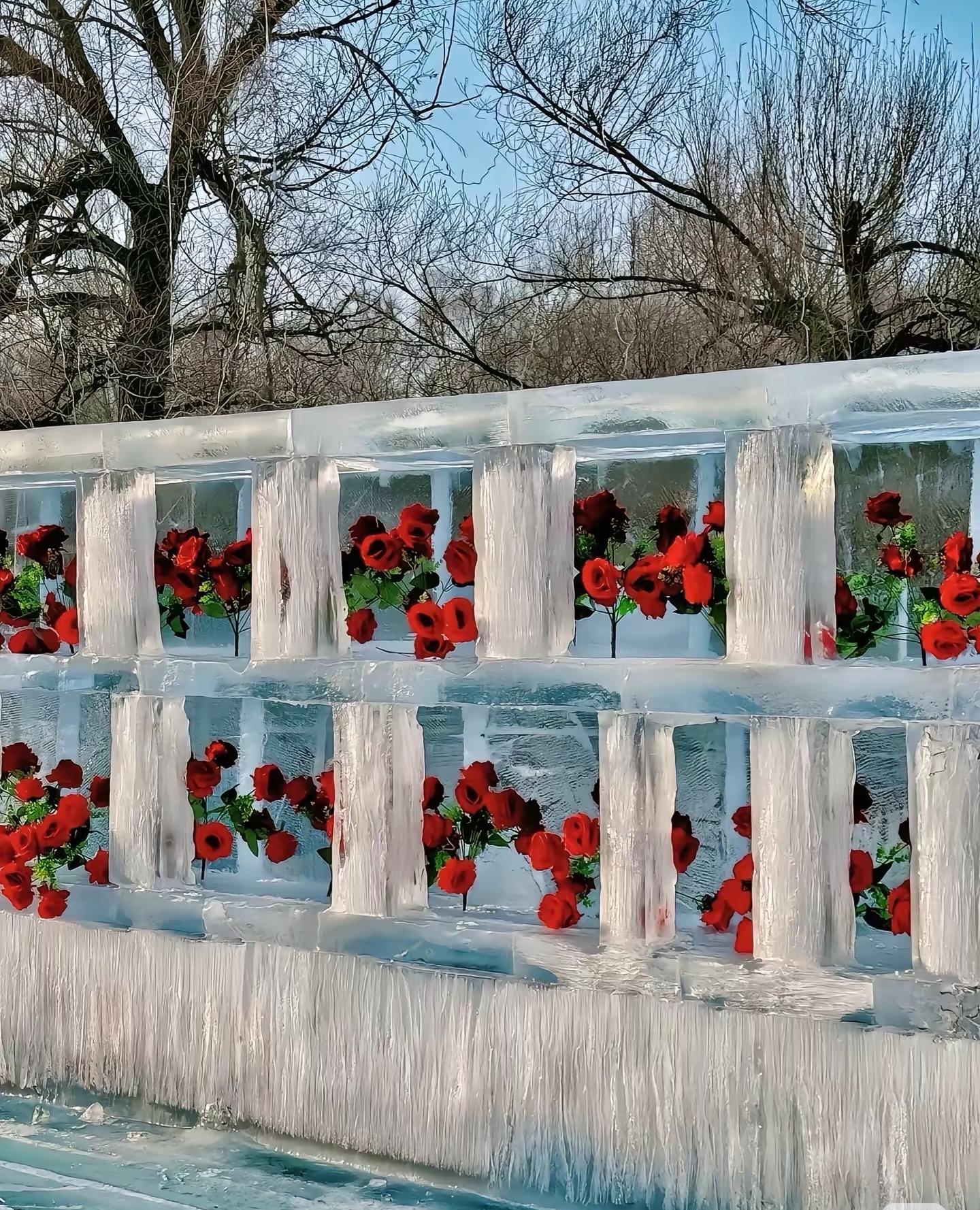
Zhaolin Park in the city centre is where Harbin's ice-lantern tradition began in the 1960s. When the seasonal display is staged, it is smaller and quieter than the Ice and Snow World, with lit ice sculptures along the park paths. It suits an evening walk rather than a full outing.
The city between the venues
Central Street and Saint Sophia Cathedral
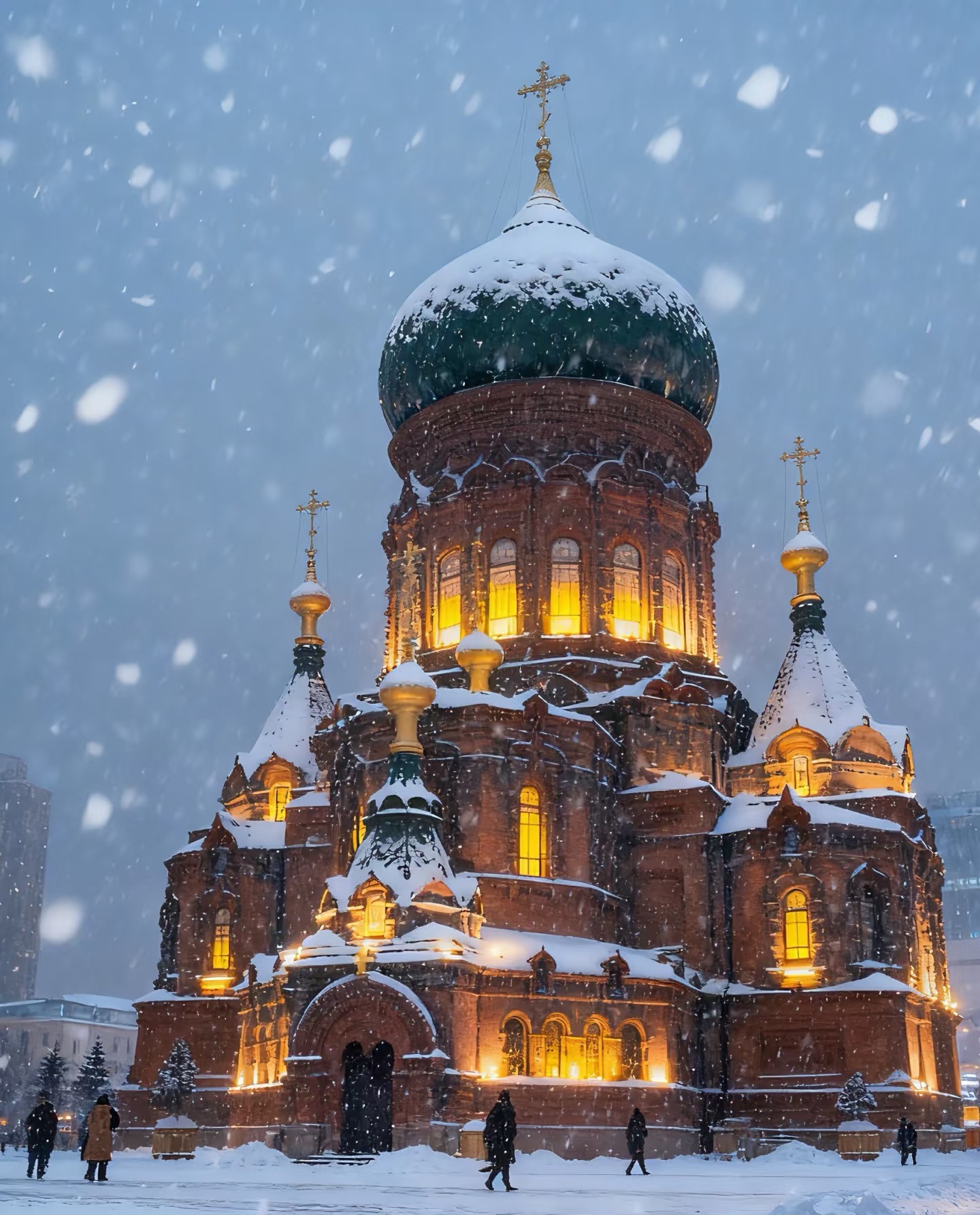
Central Street (Zhongyang Dajie) is a 1.4 km pedestrian street of early twentieth-century European-style buildings, built when Harbin grew around the Chinese Eastern Railway. The shops sell Harbin red sausage, dalieba bread and Modern ice cream, which people eat outdoors in the cold.
Saint Sophia Cathedral, a few streets away, is a former Russian Orthodox church and the city's best-known building. It now houses an exhibition of photographs of old Harbin. Go in daylight for the brickwork, or at dusk when the square is lit.
A practical walk: start at Saint Sophia in the late afternoon, walk Central Street as the lights come on, and finish at the Flood Control Monument on the riverbank. Two to three hours with food stops.
The frozen Songhua River
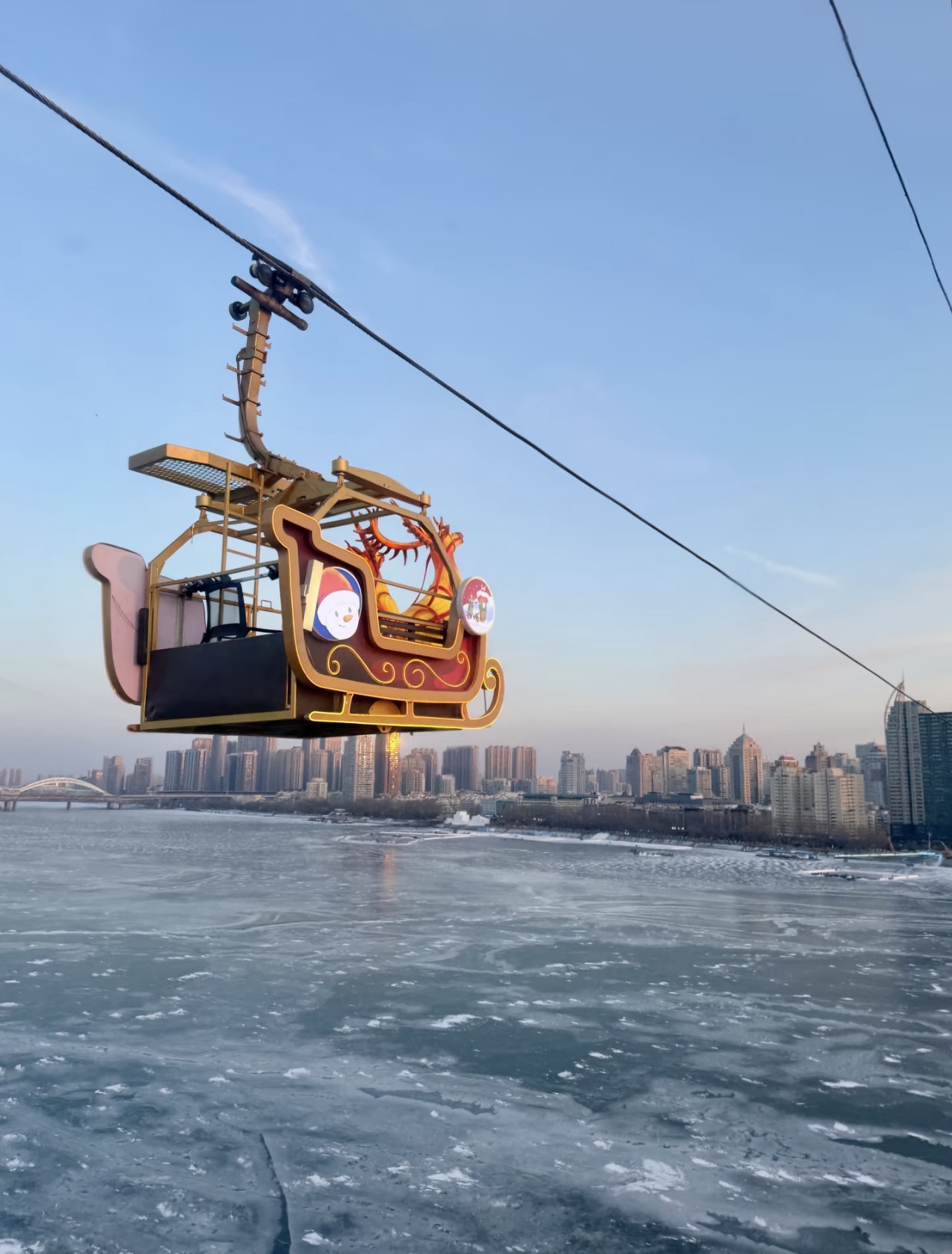
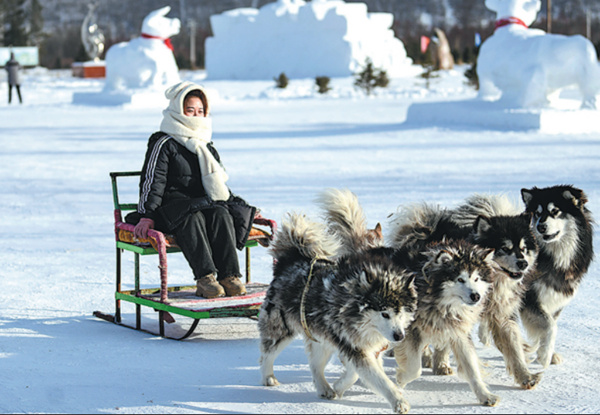
In winter the river freezes solid and the city-centre stretch becomes an open-air carnival. You can ride a horse-drawn sledge, pedal an ice bicycle, drive an ice bumper car, or try the traditional spinning tops. There is also a cable car across the river to Sun Island, which gives a view of the frozen expanse and the city skyline.
This is different from ice fishing, which is arranged on managed lakes outside the city and takes at least half a day with transport, gear and a heated hut.
Volga Manor
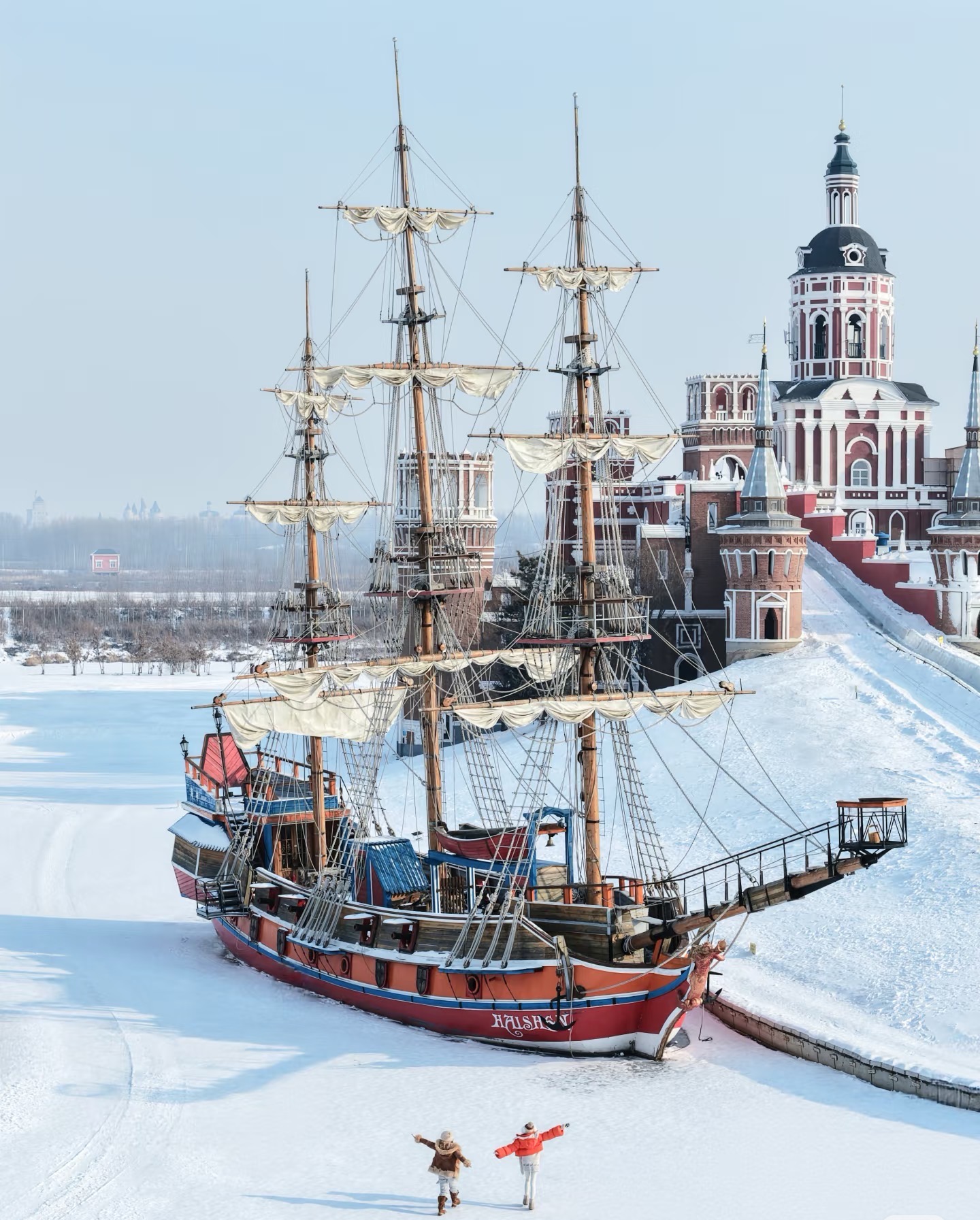
About an hour's drive from the city, Volga Manor is a large park of Russian-style buildings set among birch forest and a frozen lake. The wooden St Nicholas church at its centre is a reconstruction of a Harbin landmark demolished in the 1960s. In winter the park runs a snow slide from the castle ramparts, short beginner cross-country ski trails, and a cellar bar where drinks are served in glasses cut from ice. It is a full half-day and a good change of pace from the city.
What to eat
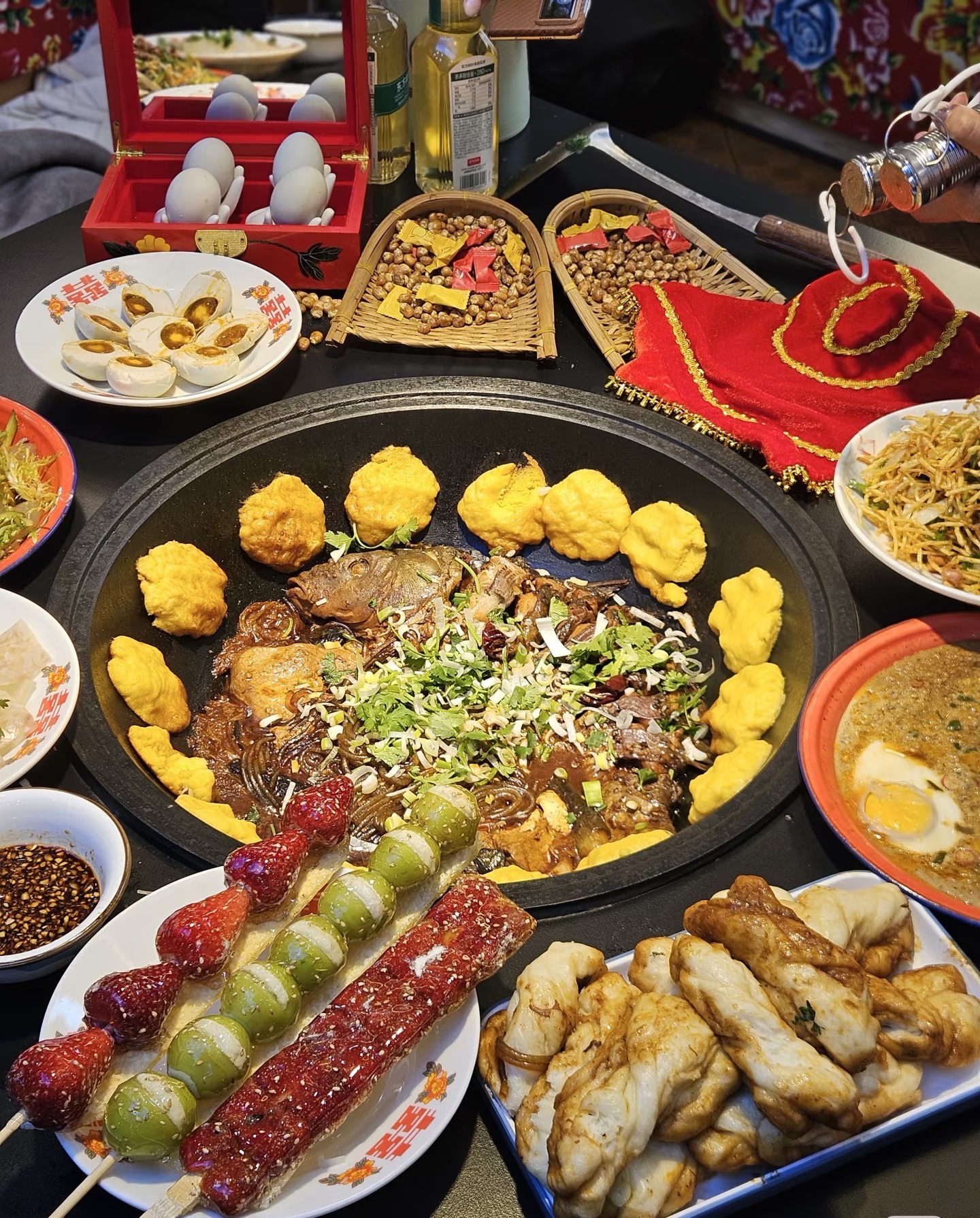
Harbin food comes from two directions: hearty north-eastern Chinese cooking, and the bread, sausage and drinks that arrived with the Russians.
- Guo bao rou: thin pork slices fried crisp and finished with a sweet-and-sour sauce. Order it as part of a shared meal.
- Iron-pot stew (tieguo dun): a slow-cooked pot of fish, chicken or pork ribs with potatoes and beans, with cornmeal cakes baked around the rim. Made for groups after a cold day out.
- Harbin red sausage, dalieba bread and kvass: smoky garlic sausage, a large Russian-style loaf, and a lightly fermented bread drink. Sold on Central Street.
- Dumplings and home-style dishes: pork and pickled-cabbage dumplings, chicken stewed with mushrooms, disanxian (potato, aubergine and green pepper).
- Modern ice cream: a plain brick of ice cream eaten on Central Street at -20°C. It is a local habit, and it works.
The cold, in practice
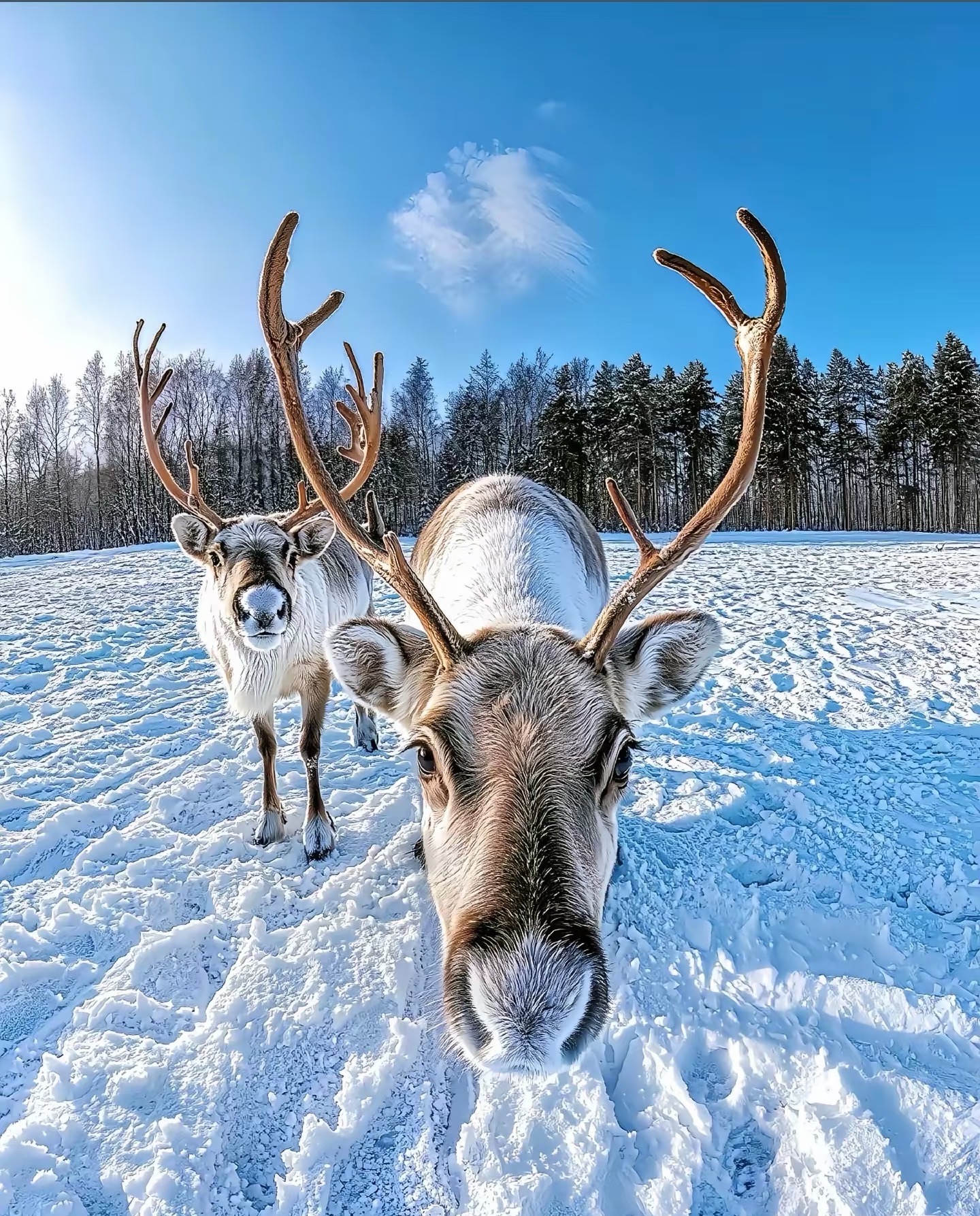
Daytime temperatures in January sit around -15°C to -20°C, with nights at -25°C or lower. Three things make this manageable.
First, every building is heated to around 22°C. Harbin is built for winter in a way Sydney or Melbourne is not. The pattern of a day is warm car, 15 to 30 minutes outdoors, warm building, repeat.
Second, clothing. An Australian winter coat is not enough. You need a thermal base layer, a down jacket rated for well below freezing, windproof trousers, insulated boots with grip, a hat that covers the ears, gloves, and a scarf or face covering. All of this can be bought in Harbin if you prefer not to carry it.
Third, batteries. Phone and camera batteries drain quickly below -10°C and phones can shut down. Keep devices in an inside pocket and carry a power bank.
Going with children
Harbin works well for families because children are doing things rather than looking at things: ice slides, snow tubing, sledges on the river, ice bikes. Harbin Polar Park is an indoor aquarium with beluga whales, polar bears and penguins, and it doubles as a warm-up stop between outdoor sites. We plan family days with shorter outdoor blocks and more indoor breaks.
One day from a private Harbin journey
This is a day we planned for a couple travelling in January.
- 9:30 Depart hotel by private car. Morning at Harbin Polar Park, timed for the beluga performance.
- 12:00 Lunch indoors near the river.
- 14:30 Arrive at Harbin Ice and Snow World in daylight. Walk the main structures while the ice is still clear.
- 16:10 Sunset. Lights come on across the park.
- 17:30 Warm-up break in the indoor area, then the ice slide once queues have thinned.
- 18:45 Return to the hotel by private car. Dinner at an iron-pot stew restaurant.
Three or four blocks in a day, a warm car between them, and free time at each stop. That is the pace we use for every winter itinerary.
How we plan it
Every JadeDays journey is private: your own guide and car for the whole trip, no shopping stops, hotels chosen for location and heating rather than star count. For Harbin we handle the things that are hard to do from Australia: timing your Ice and Snow World visit to the light, booking the festival venues in advance, arranging cold-weather clothing if you need it, and keeping the day short enough that nobody is standing in -25°C for longer than they want to.
Harbin can be a trip on its own, or the winter chapter of a longer route through Beijing and Xi'an.
Frequently asked questions
When is the Harbin Ice and Snow Festival in 2027?
The festival season runs from late December 2026 to late February 2027. The official opening is usually held on 5 January. Ice and Snow World typically opens in late December, weather permitting.
How cold is Harbin in January?
Daytime temperatures are around -15°C to -20°C and nights fall to -25°C or lower. Buildings and vehicles are heated, so you move between warm spaces and short periods outdoors.
Is Christmas a good time to visit Harbin?
Yes for a white Christmas and the city atmosphere. The festival itself is not at full scale until early January, so some ice structures may still be under construction at Christmas.
How many days do you need in Harbin?
Three full days covers the Ice and Snow World, Sun Island, the city centre and the river. Add a day for Volga Manor or a fourth for a slower pace with children.
Can you visit Harbin as part of a longer China trip?
Yes. Harbin is about two hours by air from Beijing, so it fits naturally as the winter chapter of a route through Beijing and Xi'an.