
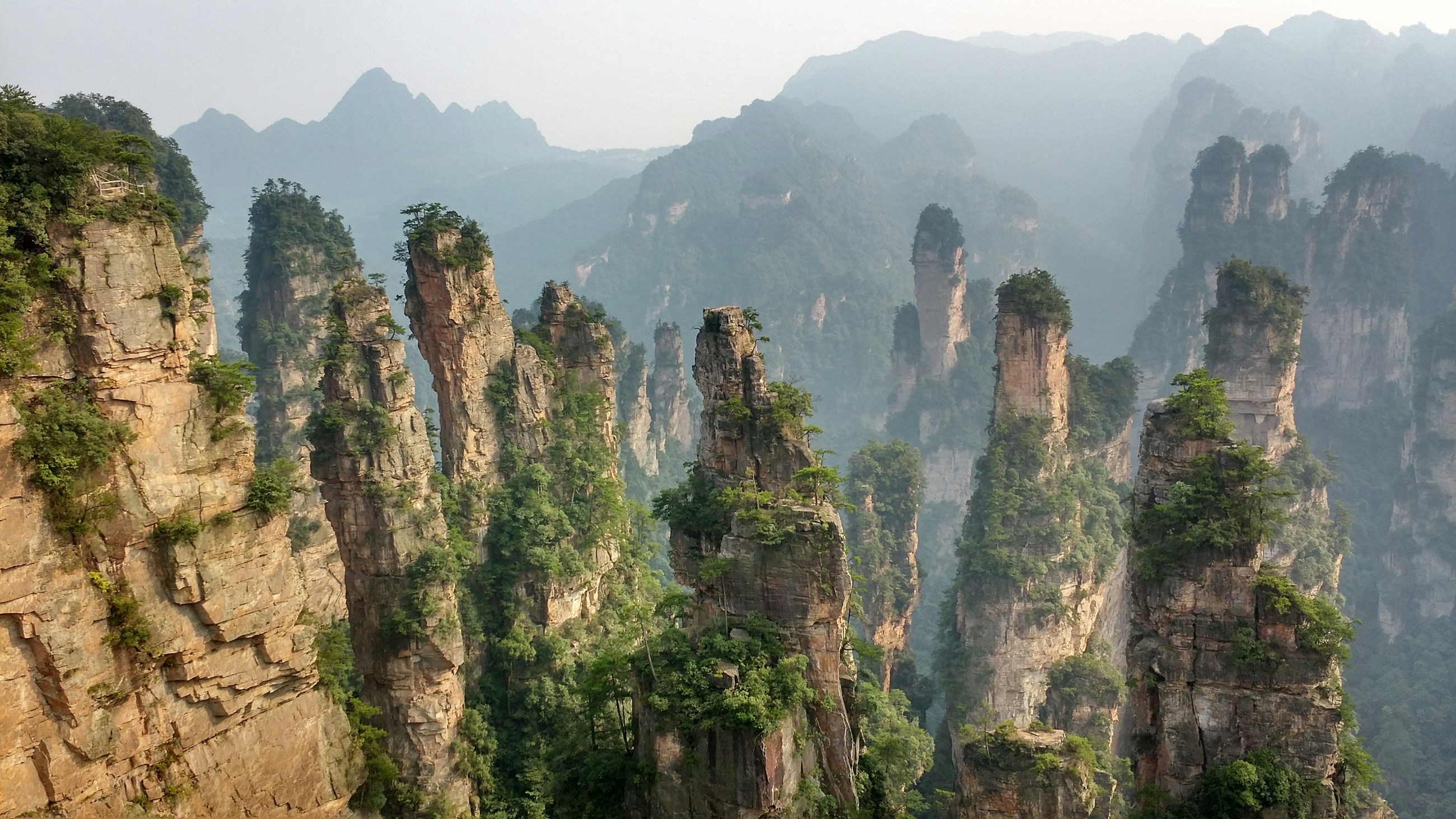
Zhangjiajie in summer is not subtle. The forests are deep green, the air is warm and heavy, waterfalls run stronger, and mist moves through the sandstone pillars like stage smoke. This is the season when the landscape feels most alive — lush, dramatic, almost unreal. It is also the season that asks the most from planning.
The honest version matters. Summer can be hot and humid. July school-holiday crowds can be very real. Afternoon weather can change quickly. But for travellers who understand the trade-off, summer gives Zhangjiajie a theatrical force that quieter seasons cannot fully imitate. The pillars rise out of green forest, rain refreshes the stone, and the whole region feels charged.
Zhangjiajie appears in both China Scenic Horizons and, where the route allows, China Highlights in Style. It is one of China's great landscape set pieces, and the Summer in China tab explains why summer can work when a route is shaped intelligently.
The Drama of Heat, Rain and Stone
Zhangjiajie's sandstone pillars are strange in any season, but summer makes them feel almost alive. Vegetation thickens around the bases and clings to the cliffs. Cloud wraps the upper sections. After rain, the rock darkens and the trees shine. Waterfalls and streams feel fuller, and even ordinary paths can carry the scent of wet forest.
The season rewards early starts. Morning is when the air is more forgiving, the light can be softer, and the most popular viewpoints are easier to manage. By midday, the day often needs a change of rhythm: a transfer, a shaded path, a longer lunch, a hotel pause, or a lower-intensity section. This is not wasted time. It is how summer travel remains enjoyable.
The mistake is to treat Zhangjiajie like a simple viewpoint checklist. It is a large, layered landscape with weather, elevation, transport systems and crowd patterns all affecting the experience. A private day should be built around flow: where to be early, where to pause, when to move, and when to let the weather create atmosphere rather than frustration.
4 Summer Experiences Among the Pillars
1. First Light in the Forest Park
Zhangjiajie National Forest Park is the place most travellers imagine before they arrive: narrow pillars, forested valleys, cliffside paths and views that seem too vertical to be real. In summer, the best version begins early. The air is cooler, the light is more delicate, and the first viewpoints can feel genuinely transporting before the day gathers heat.
Mist can either reveal or conceal the view. That uncertainty is part of the summer bargain. One moment the pillars disappear into cloud; the next, a gap opens and the whole valley appears. The traveller who wants absolute control may find this maddening. The traveller who enjoys atmosphere may find it unforgettable.
2. Waterfalls, Streams and Green Ravines
Summer brings water into Zhangjiajie's story. Streams run stronger, ravines feel lush, and waterfalls have more presence than they do in drier periods. These details matter because the region is not only about distant views. Some of the most satisfying moments happen closer to the ground: crossing a damp path, hearing water below a bridge, watching cloud cling to the cliff face.
The better summer itinerary mixes spectacle with relief. A huge viewpoint can be followed by a greener, shadier section. A hot transfer can be balanced by a cooler forest walk. The landscape has enough variety to make that possible.
3. Tianmen Mountain When the Cloud Moves
Tianmen Mountain has its own drama: high roads, cliff paths, the famous natural arch, glass walkways where suitable, and views that shift quickly with weather. In summer, cloud can create a sense of height that clear skies sometimes flatten. You may not always see forever, but you often feel the mountain more intensely.
This day needs honest pacing and comfort-based choices. Not every traveller enjoys exposed paths or glass sections. A private plan can use the mountain's transport and route options to match the day to the traveller rather than forcing everyone through the same sequence.
4. A Crowd-Smart Private Day
The most important summer experience may be the least glamorous: a day that simply works. Zhangjiajie is popular, and summer school holidays increase pressure on the famous areas. The difference between a frustrating day and a memorable one often comes down to timing, route order and knowing when not to push.
That can mean entering early, eating at a quieter time, choosing a less obvious viewpoint, or shifting an exposed walk away from the hottest part of the day. None of this removes the popularity of the place. It makes the popularity manageable.
4 Flavours After a Mountain Day
1. Tujia-Style Mountain Cooking
Zhangjiajie sits in a region where Tujia food traditions, Hunan spice and mountain ingredients shape the table. Meals can be hearty, smoky, sour, spicy and deeply satisfying after a day outdoors. This is not delicate banquet cooking. It is food with weather in it.
A good mountain meal should restore you: rice, vegetables, pork or chicken where suitable, pickles, broth, chillies and enough generosity to make the day feel complete.
2. The Local Three-Pot Tradition
One of Zhangjiajie's best-known local dishes is often described as a three-pot or mixed hot pot style, bringing together meats, vegetables, tofu or other ingredients in a bold, savoury base. Versions vary, and that is part of the point. It is a local comfort dish rather than a museum piece.
After a humid day among the pillars, this kind of meal makes sense. It is warming, filling and communal, especially when balanced with lighter vegetables and rice.
3. Sour, Spicy and Refreshing Notes
Hunan food is famous for chilli, but in mountain areas sourness matters too. Pickled vegetables, sharp sauces and bright seasonings cut through the heaviness of humid weather. For travellers who worry that every meal will be too fiery, the answer is guidance: order for balance, not bravado.
The best meals let you taste the region without turning dinner into a test.
4. Simple Fruit, Tea and Rest
Not every summer food moment needs spice. Fresh fruit, tea, a cool drink and a quiet pause can be exactly right between mountain sections. Zhangjiajie days can be physically and visually intense; the small resets matter.
This is one of the quiet advantages of private travel. You can stop before everyone is exhausted, eat when the day needs it, and treat comfort as part of the design rather than an afterthought.
A Summer Landscape With Conditions Attached
Zhangjiajie in summer is spectacular, but it is not effortless. Heat, humidity, rain and crowds need to be acknowledged rather than hidden. July in particular can feel busy because school holidays bring more domestic travel. The solution is not to avoid the season automatically. It is to build the day intelligently: start early, stay flexible, use shade and transfers well, and allow rain to become atmosphere when it arrives.
For travellers who accept that trade-off, the reward is a landscape at full volume. The pillars are green, the waterfalls stronger, the mist alive, and the whole region feels less like scenery than theatre.
Getting There & Travel Made Easy
Zhangjiajie is usually reached by flight or rail connections as part of a wider route, and it benefits from careful sequencing. It pairs naturally with Guilin and Yangshuo in a scenery-led journey, or with China's classic icons when the route is shaped for variety.
Summer makes logistics more important, not less. Hotel location, ticket timing, transfer planning, rest windows and weather-aware routing all affect how the destination feels. Handled well, Zhangjiajie becomes not a hard day in the heat, but one of the most dramatic chapters of a China journey.