
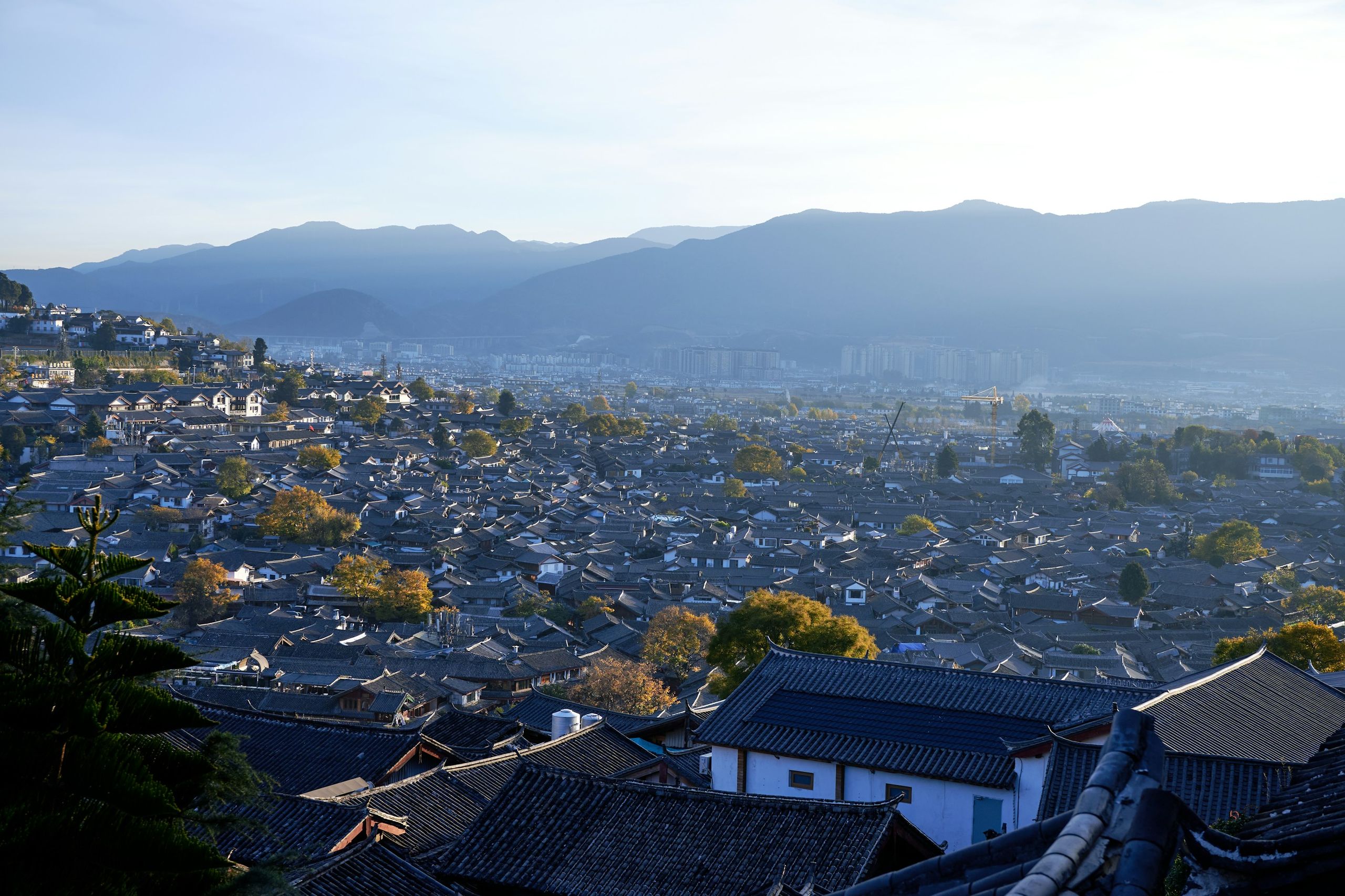
Summer in China has a reputation: hot, busy, humid, intense. Much of that reputation is deserved. But Yunnan plays by different rules. Dali and Lijiang sit high in the southwest, where mountain air, old towns, lake country and highland light create a summer that feels far more forgiving than the lowlands. This is not a trick or a marketing phrase. Altitude changes the mood of the season.
For Australian families, the timing is especially useful. The late June to July winter school holiday window at home lands right inside Yunnan's green highland season. While Shanghai, Chengdu or southern lowlands can feel heavy, Dali and Lijiang offer a route with cooler mornings, bright old-town evenings, mountain scenery and enough variety to keep both adults and younger travellers engaged.
The region belongs naturally to Sichuan & Yunnan Discovery, especially for travellers drawn to a journey that moves from pandas and mountain culture into Dali, Lijiang and the tropical south. For the broader seasonal frame, see the Summer in China tab.
The Highland Logic of Summer
Yunnan's summer is not dry-season Yunnan. It is greener, more humid in the afternoons, and more likely to bring showers than the crystal-clear autumn months. That is the honest caveat. If your dream is sharp blue skies every day over snow mountains, autumn may suit you better. But if your priority is escaping lowland heat while travelling during Australian winter holidays, the highlands make practical sense.
Dali and Lijiang sit at roughly 2,000 metres, with strong sun, cooler mornings and evenings, and landscapes that respond beautifully to summer moisture. Hills are green. Lake edges feel alive. Old towns glow after rain. The season is not about avoiding weather; it is about choosing a route where summer's intensity becomes manageable.
Private pacing is especially helpful here. A summer highland day should start early, protect the middle of the day, and leave room for late afternoon light. It should also respect altitude, sun exposure and changing weather. The result can feel surprisingly gentle: active when it needs to be, restful when the day asks for it.
4 Summer Experiences That Suit Yunnan
1. Dali and Erhai Lake in Green Season
Dali's appeal lies in its balance: lake, mountains, Bai culture, old-town lanes and villages that still feel tied to the land around them. In summer, Erhai Lake and the surrounding fields take on a greener, more relaxed mood. The day can move between lake views, village stops, simple craft or market moments, and enough downtime to avoid making the highland sun feel punishing.
The best Dali day is not a race around the entire lake. It is a carefully chosen arc: one or two beautiful lake sections, a village with texture, a meal that feels local, and a late afternoon return when the light softens on the water.
2. Lijiang Before the Day Gets Busy
Lijiang is famous, and famous old towns need careful timing. Summer mornings are the gift. Before the busiest lanes fill, the old roofs, canals, stone streets and mountain backdrop can still feel intimate. Later in the day, the energy rises, and the experience shifts toward restaurants, music, shops and evening life.
The trick is to use both moods without letting either dominate. A private plan can take the old town early, step away when the crowds thicken, then return for a carefully chosen evening rather than drifting into the busiest current by default.
3. Mountain Air Around Jade Dragon Snow Mountain
Jade Dragon Snow Mountain gives Lijiang its dramatic northern horizon. In summer, the mountain region offers cooler air, alpine scenery and a strong contrast with the old-town lanes below. Conditions can shift quickly, and cloud may move through, but that movement is part of the highland experience.
A mountain day needs to be paced honestly. Not every traveller wants the same altitude, walking load or exposure. The better version is not about proving endurance; it is about choosing the right viewpoints, routes and pauses so the day feels exhilarating rather than draining.
4. Markets, Tea and Minority Culture Without the Rush
Yunnan's cultural richness is one of the reasons the region deserves more than a quick scenic stop. Bai, Naxi and other local traditions shape architecture, food, music, textiles, markets and the social rhythm of old towns and villages. Summer gives these places a lived-in energy: produce in markets, green hills outside town, and evenings when people come back outdoors after the heat of the day passes.
The key is sensitivity. Minority culture should not be treated as decoration. The best travel moments are respectful, contextual and small enough to feel human: a market walk, a local meal, a craft conversation, a tea pause, a guide explaining what you are seeing without turning people into exhibits.
4 Summer Flavours of the Highlands
1. Wild Mushrooms, With Sensible Judgment
Yunnan is famous across China for wild mushrooms, and summer is when they become a major seasonal obsession. The flavours can be extraordinary — earthy, aromatic, deeply tied to place — but this is also a category where responsible sourcing and proper cooking matter.
The honest advice is to enjoy mushrooms through reputable restaurants and local guidance, not casual experimentation. Done well, a mushroom meal can be one of the great Yunnan memories. Done carelessly, it is not worth the risk.
2. Crossing-the-Bridge Noodles
Crossing-the-bridge noodles are one of Yunnan's signature comfort foods: broth, rice noodles, thinly sliced ingredients and a ritual of assembly that feels both simple and theatrical. They work beautifully in summer because the dish is nourishing without being heavy, and the broth brings comfort after a morning outside.
It is also an easy dish for first-time visitors to enjoy. Familiar enough to be welcoming, local enough to feel rooted.
3. Bai and Naxi Table Traditions
Dali and Lijiang each have local food identities shaped by the communities around them. You may encounter lake fish, local cheeses, cured meats, vegetables, pickles, flowers, herbs and breads that feel very different from coastal or northern Chinese cooking. The pleasure lies in variety rather than one trophy dish.
A good Yunnan table often tells the story of altitude: preserved flavours for mountain life, fresh produce from green valleys, and generous food designed for sharing.
4. Tea, Flowers and Highland Snacks
Tea culture runs through Yunnan in many forms, from casual cups to deeper conversations about leaves, mountains and trade routes. Summer is also a season for lighter snacks, flower-influenced flavours and old-town pauses between walks. Not every food moment needs to be a banquet.
Sometimes the best highland meal is simple: a table near a courtyard, something warm after rain, something fresh after sun, and enough time to sit without checking the next stop.
A Summer Escape, Not A Summer Fantasy
Yunnan is not magically weatherproof. Summer brings showers, strong sun and greener, softer air rather than the sharpest long-distance mountain views. Travellers should pack layers, sun protection and flexibility. But compared with the heat of much lowland China, the highlands offer a genuinely useful alternative.
This is why the season works so well for Australian school holidays. It does not require pretending July is ideal everywhere. It asks a better question: where in China does July make sense? Dali and Lijiang are two of the clearest answers.
Getting There & Travel Made Easy
Yunnan is best handled as part of a considered route rather than a set of disconnected flights. Dali and Lijiang pair naturally by private car, with enough time between them for lake country, old towns, mountain scenery and cultural context. Longer journeys can connect onward to Xishuangbanna or back through larger gateways.
In summer, the practical details matter: early starts, weather-flexible days, altitude-aware pacing and hotels that make rest easy. With those pieces in place, Yunnan becomes one of China's most rewarding warm-season choices.