
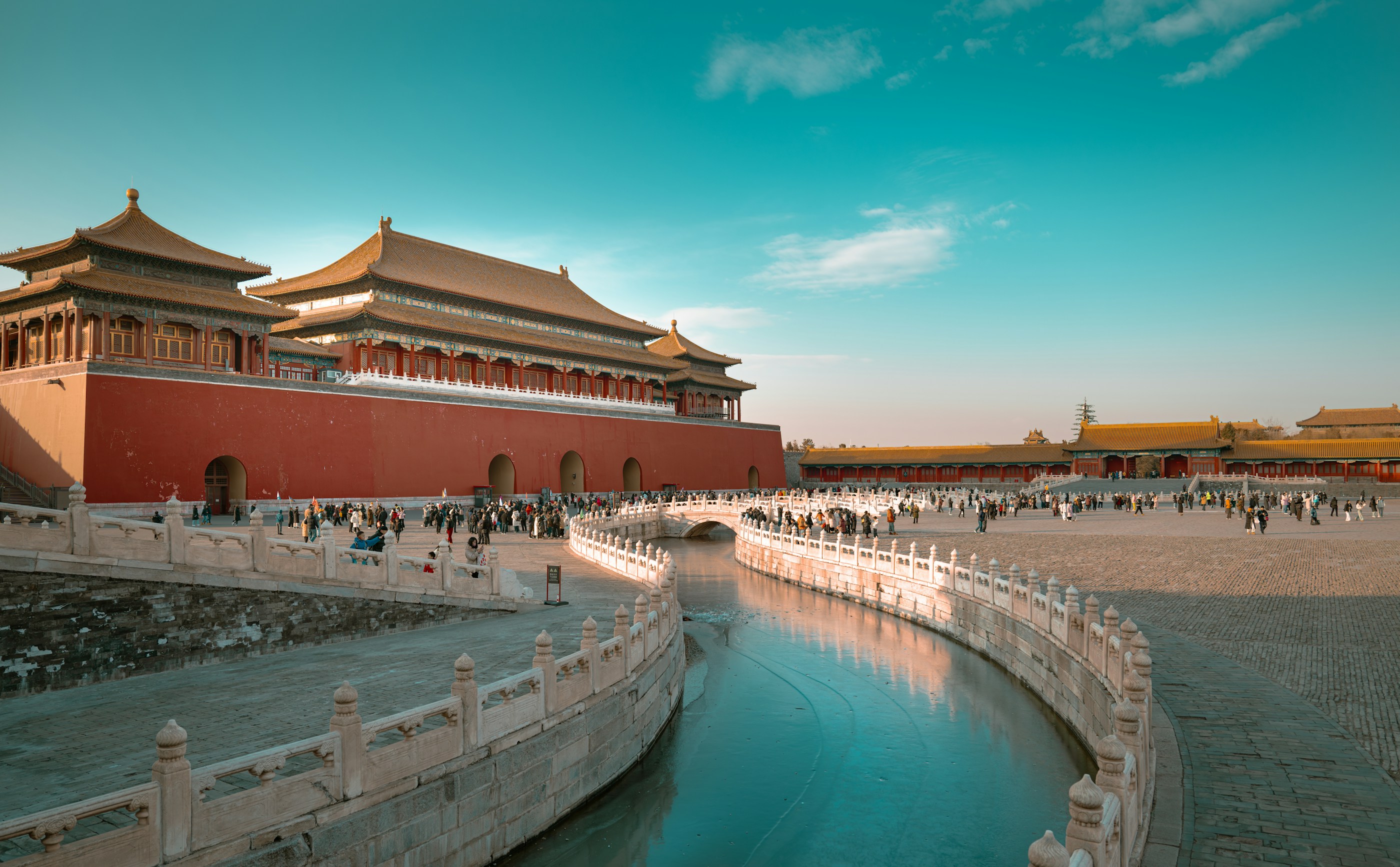
Beijing's spring is brief, sometimes dramatic, and easy to underestimate. After the long northern winter, the city seems to open all at once: palace courtyards brighten, old trees begin to flower, parks refill with music and tai chi, and the light over the imperial roofs becomes clean enough to make familiar landmarks feel freshly revealed. It is not a long season. That is part of its power.
For travellers building a first grand route through China, spring Beijing can be a beautiful opening chapter. It sits naturally within China Highlights in Style, where Beijing's imperial scale, the Great Wall and the northern rhythm of the journey all benefit from mild weather before summer heat arrives. It also belongs in the wider Spring in China conversation: not as soft and watercolour-like as Jiangnan, but clearer, grander and more public in its sense of renewal.
The honest note comes early: spring in Beijing asks for timing. The Qingming period in early April and the first days of May can bring short, sharp domestic travel surges. Blossom is never perfectly obedient. Wind can appear. But when the window opens, Beijing is magnificent — less crowded than summer, warmer than winter, and bright with that rare northern clarity.
The Capital Wakes Up
Beijing is a city of monumental spaces: palace gates, wide avenues, temple altars, city walls, lakes, courtyards and mountain ridges. In winter those spaces feel austere and powerful. In autumn they turn golden and cinematic. Spring does something different. It makes the capital feel human again.
Morning in the Temple of Heaven can begin with older residents stretching, singing, playing cards and practising tai chi beneath new leaves. A palace courtyard that might feel severe in deep winter gains softness from blossom and warmer light. Hutong lanes begin to spill back outside as neighbours sit near doorways, bicycles return to easy use, and small restaurants open their windows. Even the Great Wall feels different: less like a frozen monument, more like a stone path moving through hills that are beginning to green.
The season suits travellers who want Beijing's big sights without the heaviness of peak summer. You still need proper pacing — the Forbidden City is large in any weather — but the days are more forgiving. A private itinerary can place the major sights in the gentler hours and leave space for parks, tea houses and quieter neighbourhoods rather than trying to conquer the city in one breath.
4 Spring Experiences That Suit Beijing
1. Palace Courtyards in Clear Light
The Forbidden City is never small, never casual, never something to squeeze between other major sights. Spring gives it a softer frame. The winter chill has lifted, but the summer crowds and heat have not yet fully arrived. Rooflines catch the light cleanly. Courtyard trees begin to flower. Red walls and glazed tiles feel less severe against the season's new colour.
The right way to visit is with patience. Instead of treating it as a race from gate to gate, a spring visit can slow down around the logic of imperial space: processional routes, side halls, private quarters, stone animals, thresholds and the way power was designed into architecture. Blossom helps, but it is the light and air that make the whole place easier to absorb.
2. Park Life at the Temple of Heaven and Beihai
Beijing's parks are not decoration; they are civic living rooms. Spring is when they come back into full voice. The Temple of Heaven park fills with movement in the morning — tai chi, stretching, kite flying, conversation, music. Beihai and the lake districts have their own gentler rhythm, with paths, pavilions and water views that make the city feel older and more social than its traffic suggests.
For visitors, this is one of the best ways to understand Beijing beyond monuments. You see how locals use the city, how public life works, how tradition sits comfortably beside ordinary routine. A quiet park morning can be as memorable as any imperial hall because it shows Beijing breathing.
3. The Great Wall Before the Heat
The Great Wall is powerful in every season, but spring gives it a practical advantage. The mountain air is milder, the walking is more comfortable, and the slopes begin to turn green without the full intensity of summer. The view may be crisp or slightly hazy depending on the day; either way, the experience benefits from starting early and choosing a section that suits your walking comfort.
This is where private planning matters. The Wall is not one single experience. It can be strenuous or manageable, crowded or surprisingly peaceful, rushed or deeply moving. In spring, a well-paced Wall day has room for transfers, a cable car or lift option where suitable, and enough time on the stone to feel its scale without turning the day into a test of endurance.
4. Hutongs Before Summer Closes In
Beijing's hutongs are best when you are not fighting the weather. Spring makes the old lanes walkable again. Courtyard doors open, trees soften the grey brick, and the city feels less sealed than it does in winter or high summer. A hutong morning or late afternoon can pair naturally with tea, a small cultural studio, a simple local lunch or a quiet stop inside a restored courtyard.
The caveat is that famous lanes can feel stage-managed if you only follow the busiest route. The better version is slower and more selective: fewer stops, more context, and time to understand why courtyard life matters to Beijing's identity.
4 Seasonal Flavours To Look For
1. Peking Duck When the Evening Still Has a Chill
Peking duck is not a spring-only dish, but it sits beautifully in the season. After a day of palace walking or park wandering, the ritual of roast duck — crisp skin, soft pancakes, sweet bean sauce, cucumber and scallion — has the right balance of ceremony and comfort.
The best versions feel precise rather than heavy. A thoughtful meal gives you the table-side theatre without letting the performance overwhelm the food. In Beijing, duck is both a signature dish and a social occasion; spring makes it feel celebratory without being exhausting.
2. Noodles, Soybean Paste and Old-Beijing Comfort
Beijing food is often more grounded than visitors expect. A bowl of noodles with rich soybean paste, crisp vegetables and a simple northern directness can be exactly what you want between large sightseeing days. It is not delicate Jiangnan food and it is not fiery Sichuan cooking. It is hearty, plain-spoken and deeply local.
This kind of meal works well in spring because the days are active but not punishing. You can walk, eat properly, and still have energy for the evening.
3. Tea House Pauses
Beijing's tea culture is different from Hangzhou's tea-field romance. Here, a tea stop is often about theatre, conversation, performance or a courtyard pause. It can follow a hutong walk, sit near a cultural studio, or become the quiet hour that keeps a busy imperial day from feeling too full.
The point is not to over-schedule it. A good spring day in Beijing has contrast: open courtyards, public parks, stone and scale, then a small table where the city drops its voice.
4. Small Snacks in Park and Alley Life
Spring brings people back outside, and with that comes the pleasure of small snacks: pancakes, dumplings, skewers, fruit, roasted nuts, pastries and whatever looks good in the moment. Not every bite needs to be famous. Some of the best seasonal food memories come from a guide pointing out something ordinary and local at exactly the right time.
The rule is simple: do not let the hunt for a famous dish crowd out the rhythm of the day. Beijing rewards curiosity as much as planning.
A Short Season, Beautifully Timed
Spring Beijing is not the safest season if you want predictability. It is too short for that. Blossom can peak early or late, wind can change the mood, and the holiday windows in early April and the first days of May need thoughtful handling. But for travellers who catch it well, the reward is huge: palace courtyards softened by bloom, parks alive with local routine, the Great Wall comfortable underfoot, and a capital that feels awake without yet feeling crowded.
The best spring itinerary protects the early hours, avoids the obvious rush periods where possible, and treats the city as more than its monuments. Beijing is imperial, yes. In spring it is also social, green and surprisingly tender.
Getting There & Travel Made Easy
Beijing is one of China's easiest international gateways, and it works naturally as the opening movement of a longer private journey. Airport transfers, city distances, timed museum entries and Wall logistics all benefit from being handled cleanly, especially in a season when travellers want to make the most of good weather.
The practical goal is not to do less. It is to do the right things at the right time of day, with enough breathing room to enjoy the season you came for.