

The short answer
For most Australian travellers right now: no visa needed for a JadeDays journey — and no consulate visit either. Under China's current visa waiver arrangement, ordinary Australian passport holders can enter China without a visa for stays of up to 30 days, which comfortably covers every journey we operate. The arrangement is currently in place until 31 December 2026.
Two small pieces of preparation remain — a quick online Arrival Card before you fly, and a few documents worth carrying — and this guide walks through both, step by step. Entry rules can and do change, so treat this page as a well-maintained starting point, not a substitute for checking the official sources before you book and again before you fly. Last checked: 15 July 2026.
What the visa-free arrangement covers
The 30-day visa waiver applies to ordinary passports and covers tourism, business, visiting family and friends, and transit — so a private holiday with us sits squarely inside it. The same arrangement currently applies to New Zealand, the United Kingdom, Canada and most of Europe, which makes mixed-nationality travelling parties simpler than they've been in years.
Two boundaries worth knowing: official and diplomatic passport holders still need a visa, and the 30 days is a hard limit — if your plans in China run longer, you'll need a visa before you travel (see below).
Before you fly: two things to have in order
There is no paperwork to lodge and nothing to pre-apply for. What matters is simply:
- A passport with at least six months' validity beyond your travel dates, with a couple of blank pages.
- A confirmed return or onward booking. Airlines routinely check this before they let you board a visa-free flight, and border officers can ask to see it. Travelling with us, your itinerary and hotel confirmations are prepared for exactly this purpose.
If your plans run past 30 days, or you're travelling for work or study rather than a holiday, you'll still need a visa before you leave — see below.
The digital Arrival Card, step by step
China has replaced the old paper arrival form with a digital Arrival Card, and it's genuinely painless if you do it from your couch rather than the arrivals hall. Every foreign visitor completes one — visa-free or not — and each entry into the mainland needs a fresh card.
When: any time within 72 hours (three days) of your arrival — no earlier. The evening before you fly is ideal, once your first hotel is locked in.
Where: only through official channels, all free of charge — the National Immigration Administration's Arrival Card portal, the "NIA 12367" app, or the mini-programs of the same name inside WeChat or Alipay. Ignore any third-party website that charges a fee for this; the official form costs nothing.

How: photograph your passport's photo page and the system fills in your details from it; check them, add your flight number and the name and address of your first hotel — travelling with us, both are in your travel documents — and submit.
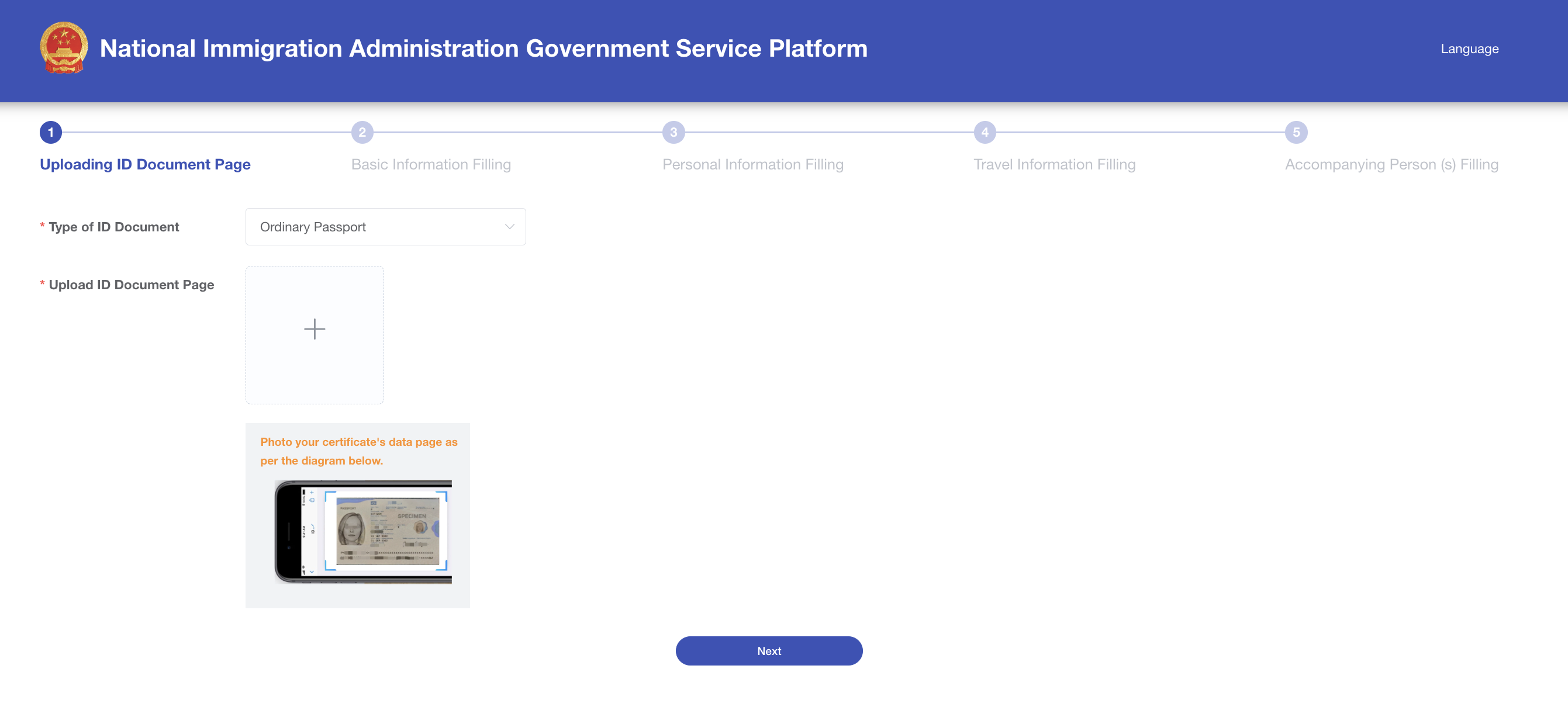
The golden rule: when your QR code appears, screenshot it and save it to your phone's photo album. Airport data can be patchy before your eSIM is sorted, and the screenshot works offline at the immigration counter.
Forgot, or couldn't get the portal to behave? Don't panic — self-service kiosks and paper cards remain available at every port. It adds a few minutes at the airport rather than costing you entry.
At the border: what actually happens
Arrival at a major gateway like Beijing or Shanghai is a short, orderly, three-step walk:
- Fingerprint kiosks. Before the immigration counters, first-time visitors aged 14 to 70 scan their passport and fingerprints at a self-service kiosk, which prints a small slip — keep it in hand.
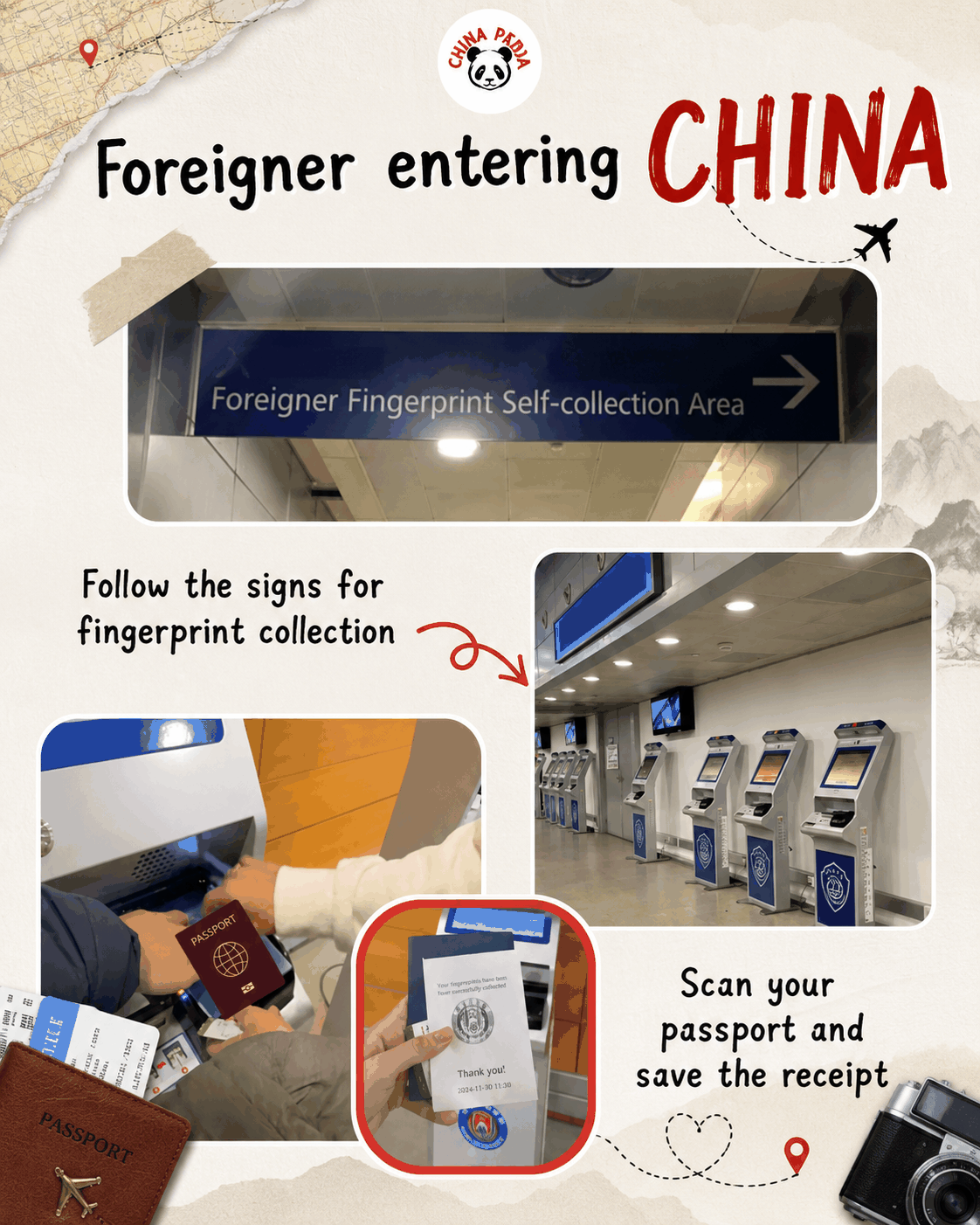
- The immigration counter. Join the Foreign Nationals lane, hand over your passport with your Arrival Card QR code on screen and the fingerprint slip, look into the camera, and answer the one question you may be asked — the purpose of your trip ("tourism" does the job). Your passport is stamped with the 30-day entry.
- Bags and the green channel. Collect your luggage, put it through the customs X-ray, and — carrying nothing to declare — walk the green channel into the arrivals hall.
One honest note: visa-free entry is an arrangement, not an entitlement. Chinese border authorities assess each traveller on arrival, and Australia's official advice notes that entry has occasionally been refused. For ordinary holidaymakers this is rare — and it's precisely why we make sure every JadeDays guest travels with complete, consistent documentation.
Staying longer than 30 days?
If your time in China will exceed 30 days — say you're adding an extended personal stay around your journey — you'll need to apply for a visa (typically the L tourist visa) before you travel, through the Chinese Visa Application Service Centre in Australia. Allow real time for this: processing typically takes around ten working days, longer around Chinese holidays, and applications generally can't be lodged more than three months before travel. First-time applicants aged 14 to 70 can expect to provide fingerprints at the application centre. We'll provide the supporting travel documentation you need; the application itself is submitted by you, or a visa agent of your choice.
Travelling on a US or other non-waiver passport?
If someone in your party holds a passport that isn't covered — travellers on a United States passport are the most common example — they'll need a visa before travelling, arranged as above. One alternative worth knowing: China's visa-free transit arrangement allows eligible nationalities, including US citizens, to spend up to 240 hours (10 days) in designated regions when transiting to a third country. It comes with conditions and doesn't suit every itinerary, so if this applies to your party, talk to us early and we'll help you think it through.
A note for dual nationals
China does not recognise dual nationality. If you or your children may be regarded by Chinese authorities as Chinese nationals — for example, children born to Chinese parents — the rules that apply can be very different, and an Australian passport alone may not settle the question. This is one area where we'd genuinely urge you to read the official guidance on Smartraveller's China page and seek advice from the Chinese embassy or consulate before booking.
Does this cover Hong Kong?
Hong Kong runs its own immigration system, separate from the mainland. Australians can generally visit Hong Kong without a visa for up to 90 days — so if your travels combine Hong Kong with a mainland journey, the two legs are assessed separately, and note that re-entering the mainland means completing a fresh Arrival Card. Our journeys operate on the mainland, where the 30-day waiver above is what matters.
What happens after 31 December 2026?
Honestly: we don't know yet, and neither does anyone else. The waiver is announced through to the end of 2026; whether it's extended is a decision China makes closer to the time, and recent history has seen these arrangements renewed in stages rather than guaranteed in advance. If you're booking travel for 2027, we'll tell you plainly what the position is at the time — and if the rules change between your booking and your departure, we'll flag it to you and help with the paperwork. Our standard Cancellation Policy applies in the usual way, so we'd always suggest confirming your entry position early.
How JadeDays helps
Every JadeDays guest receives pre-departure notes that walk through this page's checklist for your specific journey — the Arrival Card, step by step, with your hotel details ready to paste in. If the portal misbehaves or a question stumps you, our Australian-based team sorts it out with you over a quick call before you fly. We provide the supporting documentation for any visa application you need to make, and from the moment you clear customs, your guide is waiting in the arrivals hall with a name board. If anything here raises a question about your party's situation, ask us — a founder reads every message. The wider practicalities of payments, connectivity and packing live in our China travel essentials guide, with quick answers on our FAQ page.
Official sources
Rules change; these are the places we check, and the places worth bookmarking: Smartraveller — China travel advice (Australian Government), the National Immigration Administration's official Arrival Card channels (the portal linked above and the "NIA 12367" app), and the Chinese Embassy and consulates in Australia together with the Chinese Visa Application Service Centre. This page was last verified on 15 July 2026.