
The short version
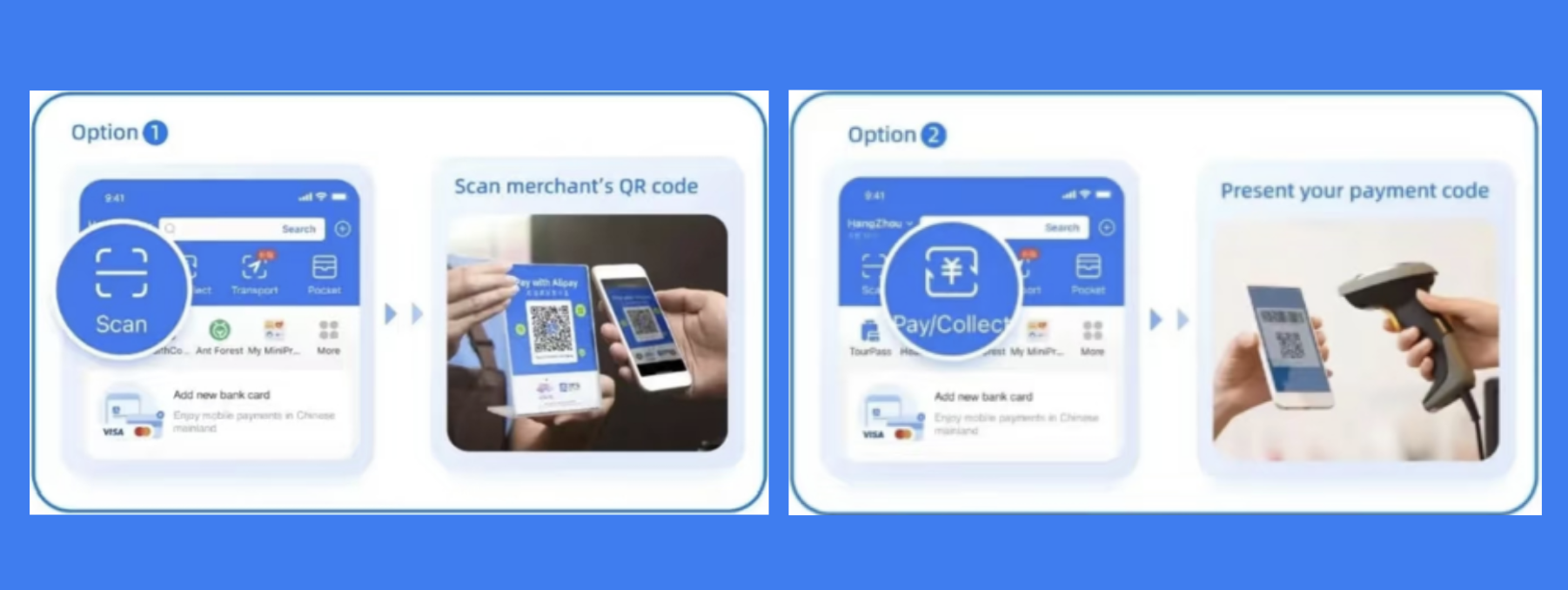
China runs on the phone. In most of the places a JadeDays traveller spends time — restaurants, taxis, shops, markets, ticket counters — the default way to pay is a QR code scanned through Alipay or WeChat Pay, not a tapped card or cash. The good news for 2026: you no longer need a Chinese bank account to use them. You can link an ordinary Australian Visa or Mastercard directly, set it up before you fly, and pay like a local from the moment you land.
This guide covers what actually matters: how to set it up, what it costs, the limits, and — just as important — what a foreign-linked card can't do. Last checked: 15 July 2026.
Do this before you fly, not at the airport
The single most useful thing we tell travellers: set your payment apps up at home, days before departure. Two reasons. First, you'll verify your identity by SMS code sent to your phone — much easier on your home network than fighting airport wi-fi in a queue. Second, some app functions can be geo-sensitive, and it's simply calmer to arrive already sorted.
You'll need your passport (for identity verification), your Australian card, and a phone number that receives international SMS.
Setting up Alipay (and WeChat Pay)
The process in 2026 is quick — usually under ten minutes per app:
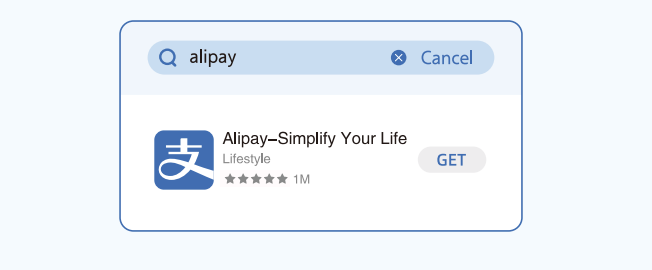
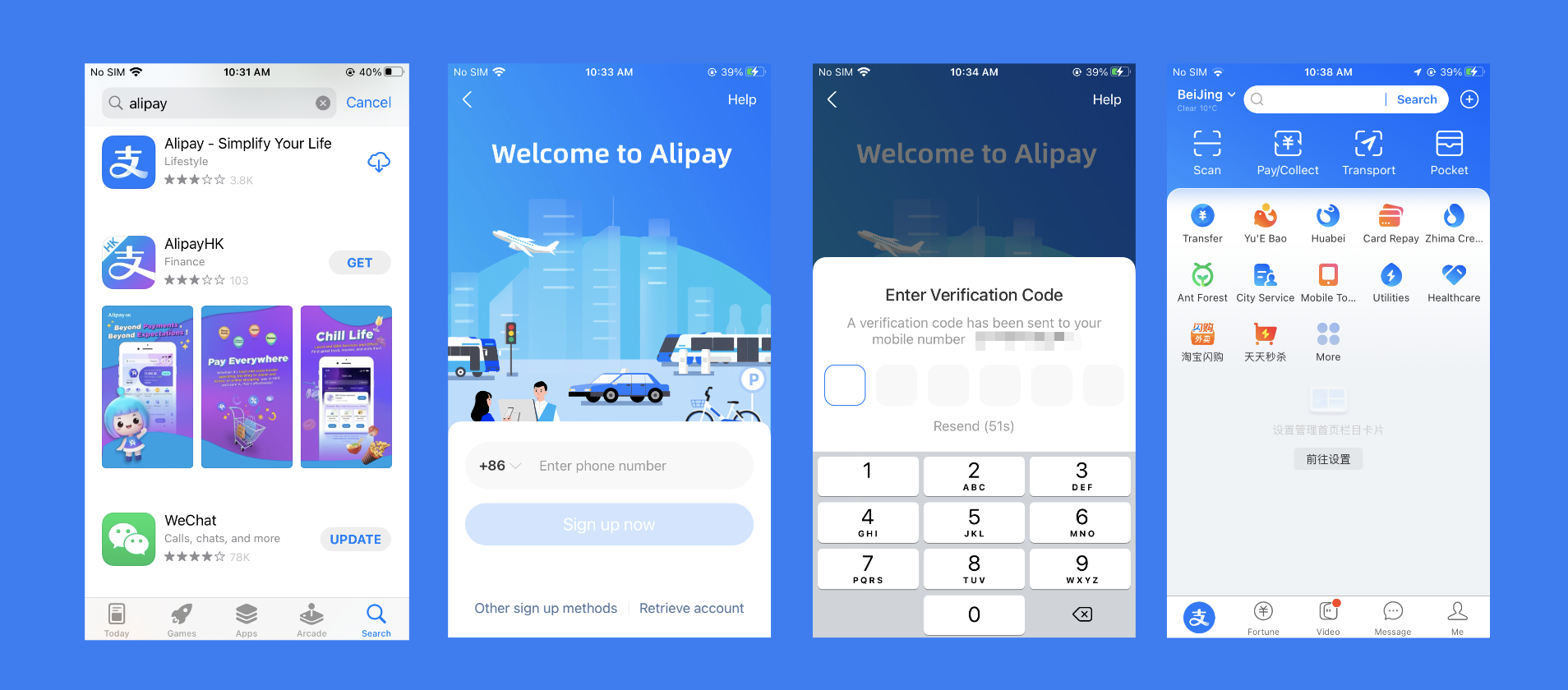
- Download the international version. Search "Alipay" (or "WeChat") in the App Store or Google Play; the tourist-facing version is the standard one you'll find in Australia.
- Register with your phone number and verify by SMS.
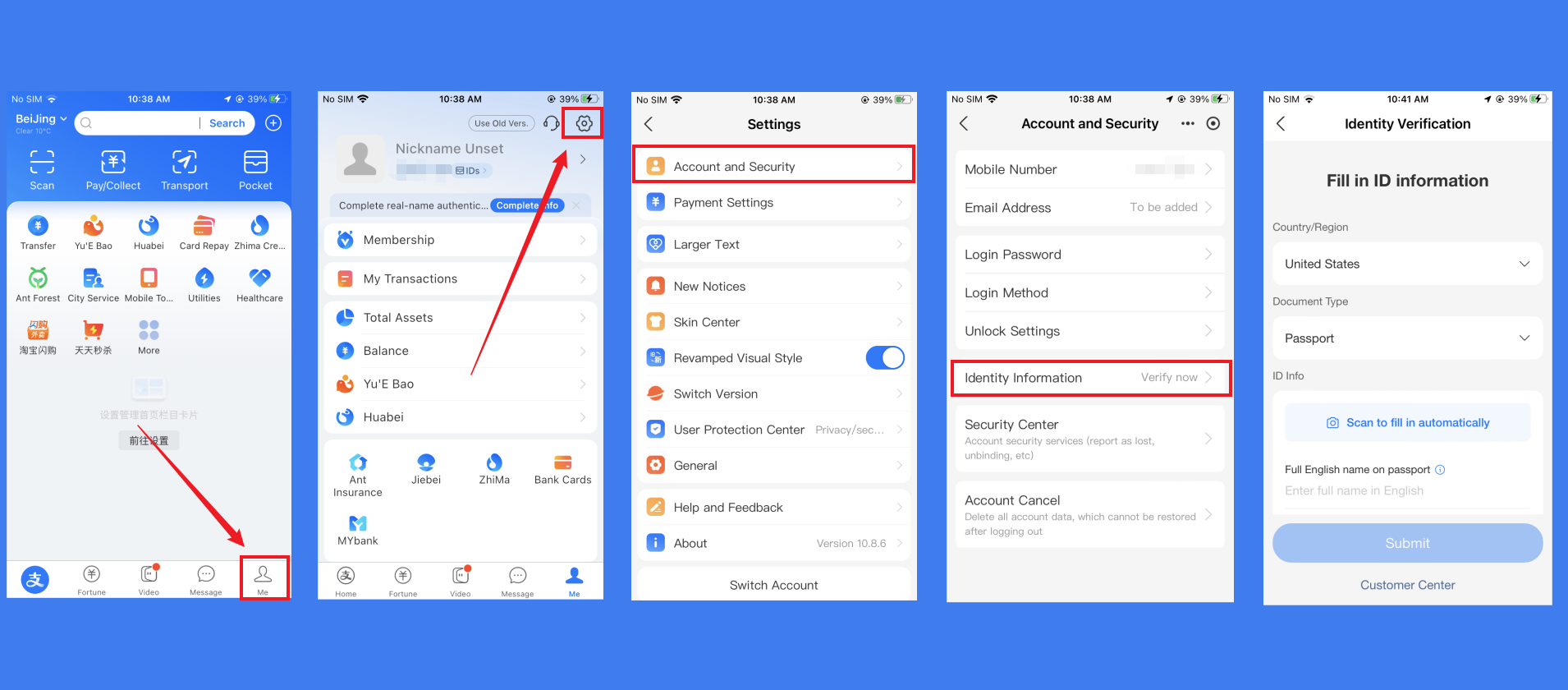
- Complete identity verification first — this is now mandatory. Upload a photo of your passport and complete a quick facial-recognition check. It's largely automatic and usually clears within minutes (occasionally longer). Until this is done, the account can't link a card or pay.
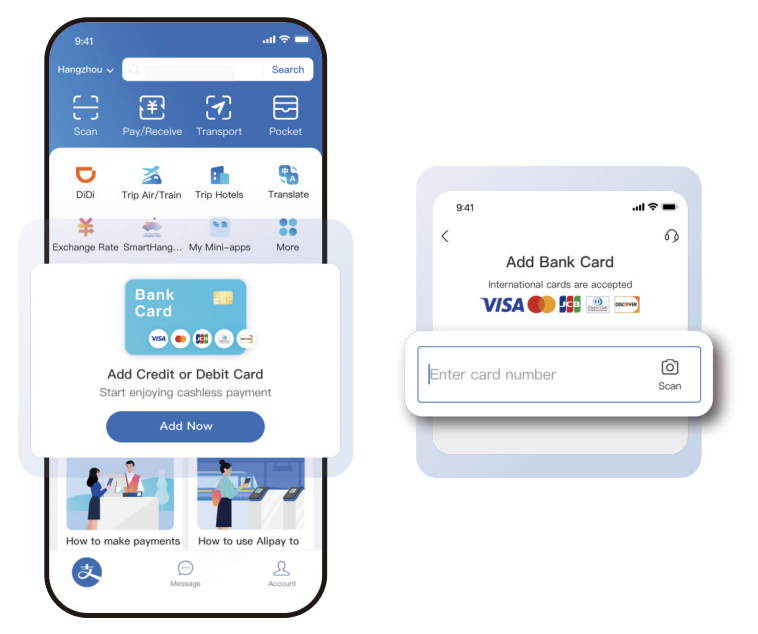
- Link your card. Alipay and WeChat Pay both accept international Visa, Mastercard, American Express, JCB, Discover, Diners Club and UnionPay — credit or debit, issued outside mainland China.
We'd suggest setting up both apps. A few merchants display only one QR code, and having both means you're never caught out.
What it costs: the ¥200 rule
Here's the rule worth memorising, because getting it wrong is the most common way travellers overpay:
- Payments of ¥200 or less: no service fee. Alipay and WeChat Pay add nothing on small transactions paid with a linked international card. Since ¥200 covers most meals, taxis, coffees and metro rides, the vast majority of your day-to-day spending costs nothing extra.
- Payments above ¥200: a 3% service fee on the whole amount (not just the part over ¥200). The fee is shown on the payment screen before you confirm, so you always see it coming.
Two honest ways to keep this near zero: keep individual app payments at or under ¥200 where you can, and pay big-ticket items — hotels, rail tickets — by card directly rather than through the app. One more, for higher spenders: an international UnionPay-branded card is exempt from the 3% service fee entirely, so if your bank offers one it's worth considering.
A separate point most guides skip: the 3% is Alipay's fee. Your own bank's foreign-transaction fee (typically 1–3%) is separate — a no-foreign-fee travel card avoids that layer.
The limits (higher than you may have read)
Many older articles still quote a ¥5,000 cap — that's out of date. Through 2025 the People's Bank of China raised the ceilings for verified international visitors, and as of 2026 a passport-verified foreign user can spend up to around ¥35,000 (about US$5,000) per single transaction, with an annual limit near US$50,000. In practice that means you can pay for a luxury hotel or a large purchase straight from the app — the old "limit exceeded" wall is largely gone for verified users.
What a linked foreign card can't do
This is the part that catches people out, so we'll be plain about it. A directly-linked international card works for merchant spending — scan-to-pay in shops, restaurants, transport, food delivery, group-buy. It cannot be used for:
- person-to-person transfers ("transfer to a friend"),
- sending or receiving red packets (hongbao),
- wealth management, insurance, or
- ATM / cash withdrawal.
Those functions require an Alipay or WeChat balance funded by a mainland Chinese bank card — which as a visitor you won't have. For an ordinary holiday this rarely matters, but it's worth knowing so nothing surprises you.
Should you still carry cash?
A little. China is overwhelmingly cashless, but not perfectly. A small number of tiny "individual" stalls hold personal accounts that can't accept international cards, and technology occasionally has an off day. Carrying a modest amount of cash — enough for a taxi and a meal — is sensible insurance, not a daily necessity. By law, Chinese merchants must accept cash, so it always works as a fallback.
How JadeDays helps
Every JadeDays traveller receives pre-departure notes covering exactly this — which apps to set up, the identity-verification steps, and the ¥200 fee rule — so you arrive already able to pay for a coffee or a taxi without a second thought. If a payment ever misbehaves, your guide is on hand to sort it out on the spot. You'll find the wider practicalities of connectivity, entry and packing in our China travel essentials guide, and quick answers on our FAQ page.